
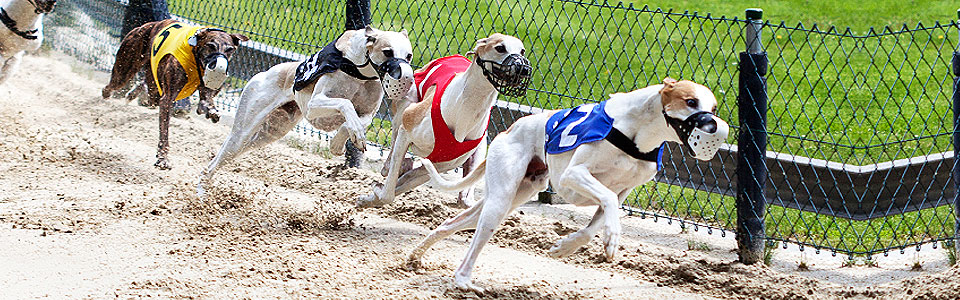

Peterborough Greyhound Racing Stadium
Peterborough Greyhound Racing Stadium is located less than a mile from the city centre of Fengate in England. The stadium's grandstand has recently been extended.
Peterborough Greyhound Racing Stadium has five bars, a restaurant, a fast-food center and a cafeteria. The stadium's tiered seating arrangements provide an unobstructed view of the thrilling racing action. It also has two self contained corporate suites and a trackside function suite.
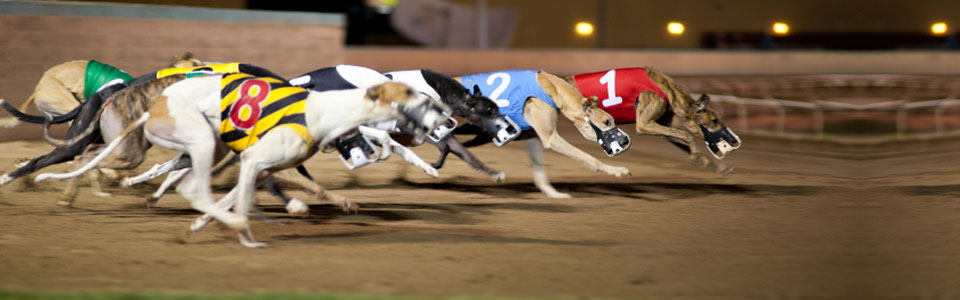
The lighting system of the racetrack was recently upgraded to state of the art floodlights that enhance the spectacle of evening racing. Races are normally conducted every 15 minutes; Peterborough Greyhound Racing Stadium plays host to England's major competitions.
Stadium Capacity: 1,500 spectators
- Circumference: 370 meters
- Distances Raced: 235, 420, 605, 790 and 975 meters
- Run to First Bend: 80 meters (4 bends race) and 80 meters (6 bends race)
- 235m Mount Royal Fox 14.31sec 19 February 1995
- 420m Highway Leader 25.15sec 30 July 1994
- 605m Glencoes Tom 37.11sec 9 April 2002
- 790m Fortunate Man 49.66sec 15 June 1992
- 975m Lenas Cadet 63.30sec 19 November 1988
- Peterborough Marathon
- Bass Brewers Cesarewitch
- Stoneacre Peterborough Derby
- Peterborough Evening Telegraph Puppy Cesarewitch
- Alan Speechley Fengate Collar
- Wafcol Puppy Derby
- Coors Brewers Marathon
- Willaim Hill Cesarewitch
Getting to Peterborough Greyhound Racing Stadium
Peterborough Greyhound Racing Stadium is located at First Drove, Fengate, Peterborough, England.
History of Peterborough Greyhound Racing Stadium
Peterborough Greyhound Racing Stadium opened in October, 1930.
In 1945, Reg Perkins and George Ellingworth purchased the stadium. During this time, the hare was pulled around the track by two men using an upturned bike. The stadium currently uses a Swaffham-McGee type hare.
When Ellingworth died, Perkins took complete control of the stadium. Perkins retired in 1977.
Today, Rex and David, Reg Perkins’ sons, manage the stadium.
On March 24, 1999, a fire severely damaged the stadium’s grandstand and an adjoining warehouse. greyhound racing was postponed for six months as repairs and refurbishments were made.
In the summer of 2003, a £3 million extension increased the length of the grandstand from 301 feet to 518 feet.
Peterborough’s race track surface is silicon sand. Up to 15 tons of salt is used during the winter months to prevent the track from freezing. During the summer, when there is no rain, the track is watered for up to three hours each day using £2,500 worth of water per year.
Place a bet on your favorite greyhound. Join bet365.
18+, GambleAware, Gamble Responsibly, #ad

